Physical turnstiles
Offline-capable edge verify at gate controllers. Signed allow or deny without a live call to central identity stores during network outages.
surface: edge | offline_verify AFFIXIO
Physical and digital gates
Attribute-based policy checks with zero-knowledge selective disclosure. Same verification packet for turnstiles, API gates, and hybrid physical-digital access, with ML-DSA post-quantum proofs.
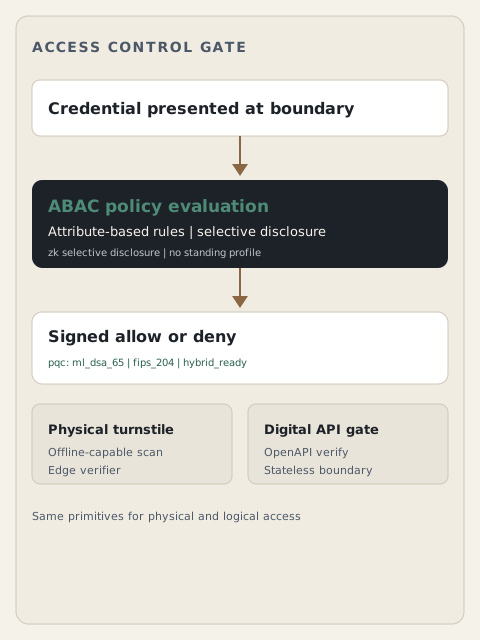
The same verification packet applies to physical turnstiles, logical API boundaries, and hybrid campus deployments. Integrate once at the policy gate, not per surface.
Offline-capable edge verify at gate controllers. Signed allow or deny without a live call to central identity stores during network outages.
surface: edge | offline_verifyOpenAPI stateless boundary checks before downstream services execute. One binary outcome per request, not a confidence score.
surface: api | openapiOne policy layer across building access, application APIs, and visitor flows. ABAC attributes evaluated once, deployed everywhere.
policy: abac | unified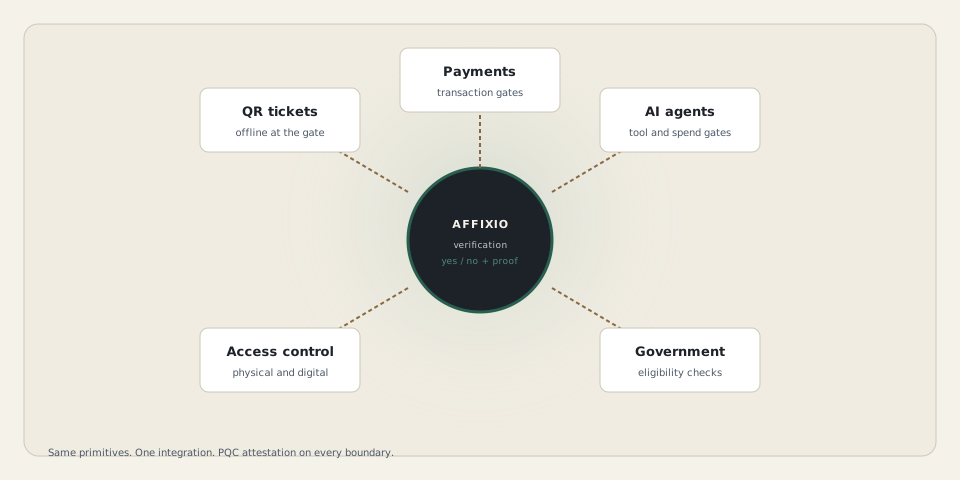
Physical and digital gates share one attestation format. Auditors replay proofs without raw PII at the verifier. FIDO-bound credentials can feed the same policy layer.
ML-DSA attestation under NIST FIPS 204 for access proofs that must still verify years from issue. PQC guide
Data minimisation by design. Verifiers receive signed yes or no with selective disclosure, not full credential payloads or standing profiles.
No standing profile stored at the gate. Each decision is a replayable cryptographic proof, not a persistent identity record at the boundary.
IAM provisions identity and assigns roles. AffixIO verifies attribute-based policy at the access boundary and returns a signed allow or deny that gate hardware, API middleware, and audit systems consume independently.
Yes. Proofs validate at the edge without a live call to central identity stores. Gate controllers cache verification keys and policy roots so allow or deny decisions hold during network outages.
Access badges and long-lived credentials must still verify years from issue. ML-DSA signatures under NIST FIPS 204 protect signed allow packets stored at gates and in audit logs against harvest-now-decrypt-later attacks.
The holder proves specific attributes satisfy policy (clearance level, membership, time window) without exposing the full credential or standing profile to the verifier. The gate receives yes or no with cryptographic proof, not PII.